Discover
The villages in Ariège
The Villages
Near the Portes d’Ariège campsite,
Medieval Circular Village
of Saint-Martin-d’Oydes
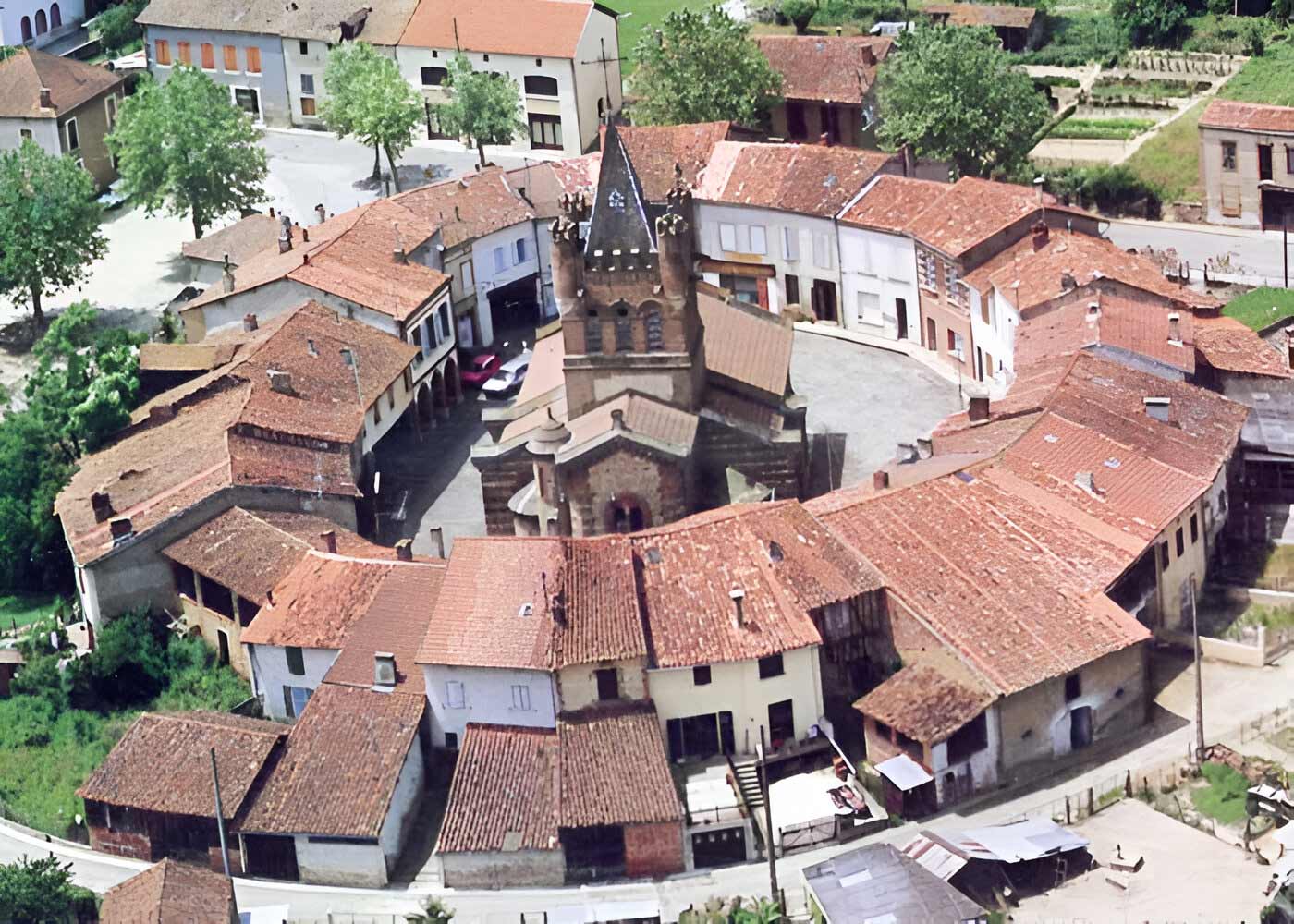
The village, part of the Pamiers area, is a remarkable example of medieval circular architecture: the houses with covered walkways are built adjoining, forming an ellipse around its fortified church. Moats surrounded the village until the mid-19th century; these were filled in and replaced by a walkway.
According to oral tradition, no town gate existed before 1862: entry to the village was only possible through a hidden passageway within one of the houses; both the living and the dead passed through this passage.
The first gate was opened to the north in 1862, leading towards the castle, and the second to the west in 1880, when the post office was established.
The church, while retaining a fortified character, lost its original pure Romanesque style from the 11th century during its reconstruction and expansion at the end of the 19th century.
Also of note is the 12th-century manor house, a fortress until the French Revolution, now privately owned.
The Bastide of Mirepoix
In the heart of Cathar Country
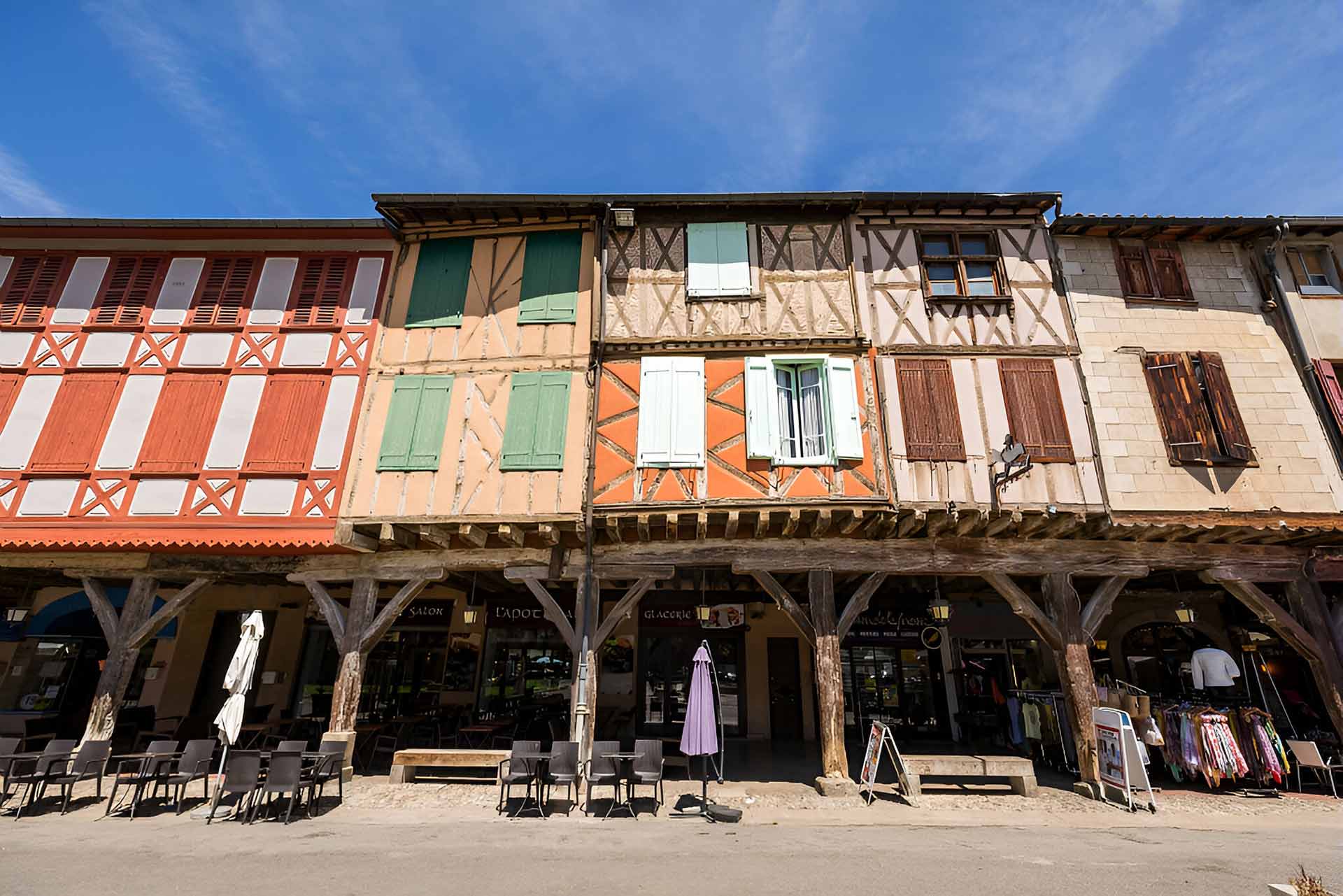
A visit to MIREPOIX, classified as a Grand Site of Occitanie and labeled a Pays d’Art et d’Histoire, is a must during your stay in Ariège, for the bastide itself, and for everything that stems from the Pays d’Art et d’Histoire to which it belongs: the Cathar country.
Mirepoix is a vibrant and touristy town in the Ariège region, which organizes numerous events throughout the year. Discover them during your stay!
- Night markets
- Flea markets
- The unmissable Apple Festival in October
- The weekly Monday market, where you’ll discover regional specialties as well as many handcrafted products
- The Consuls’ House, the oldest house in town, renowned for its carved wooden ornaments in the shape of animals or human faces
- Saint-Maurice Cathedral, seat of the former diocese of Mirepoix, listed as a Historical Monument in 1907, and its organ dating from 1891
For your children, a treasure hunt is organized on Tuesdays and Thursdays in the town. To participate, simply pick up a booklet for each child at the tourist office. From the Middle Ages to the Renaissance, history is brought to life for an hour, as if you were there yourself.
Montaut Fortified Village
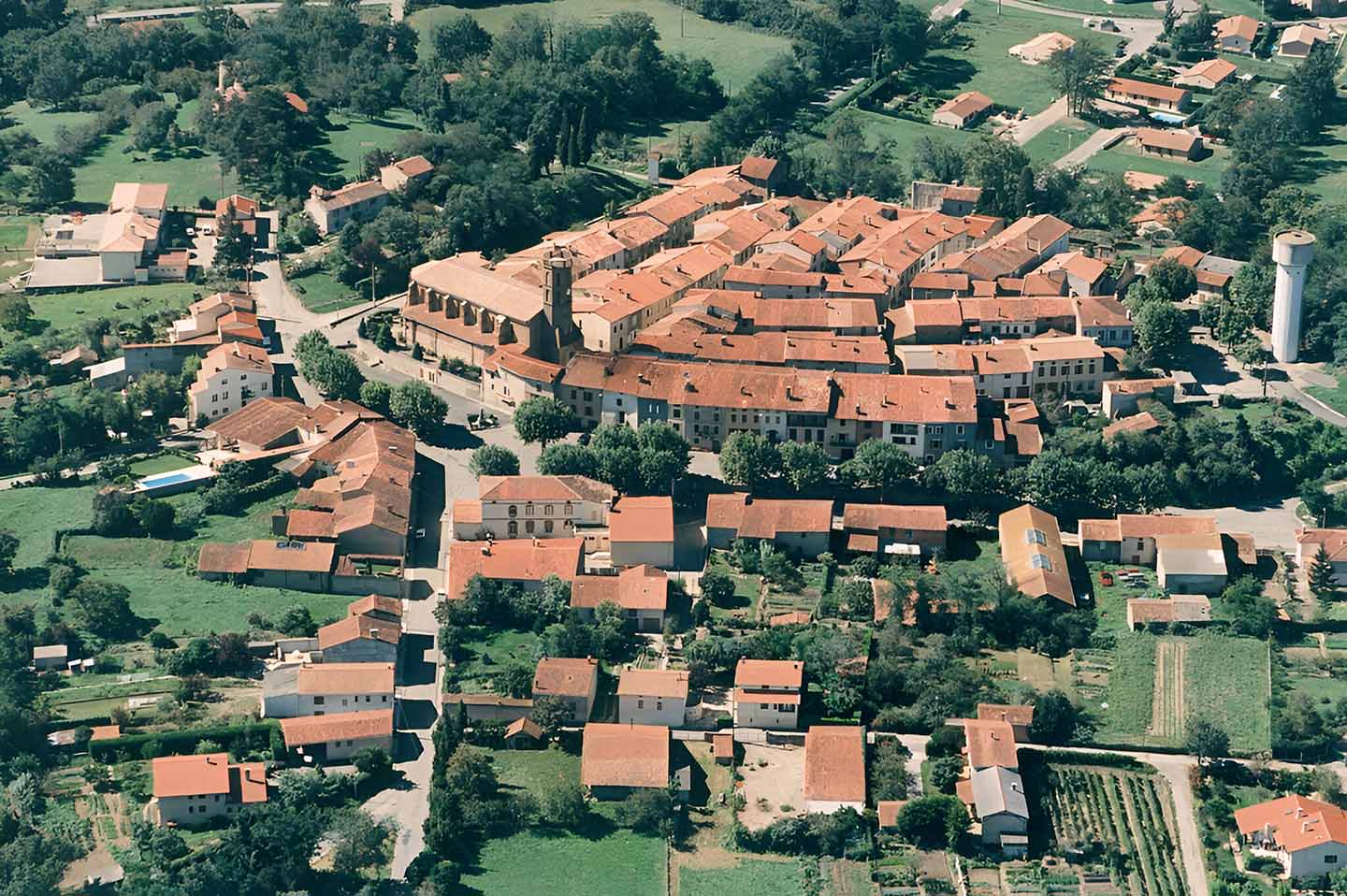
This fortified village – where Henry IV dined on June 13, 1584 – is located on a hill, at an altitude of 280m, in the middle of agricultural plains, and its octagonal bell tower (12th century) made of red bricks can be seen from afar.
Remnants of the ramparts are still visible along the access road, and to enter the village, one must pass under a gateway.
In the past, Montaut, with its castle, was a stronghold within a triangle formed by Saverdun, Mazères, and Pamiers, and its strategic position attracted considerable interest.
The 15th-century church is dedicated to Saint Michael.
The church also houses a mechanized organ with pointed rollers, built around 1830-1840 (protected since September 13, 1982).
Open for self-guided tours year-round.
Art village
The Carla-Bayle
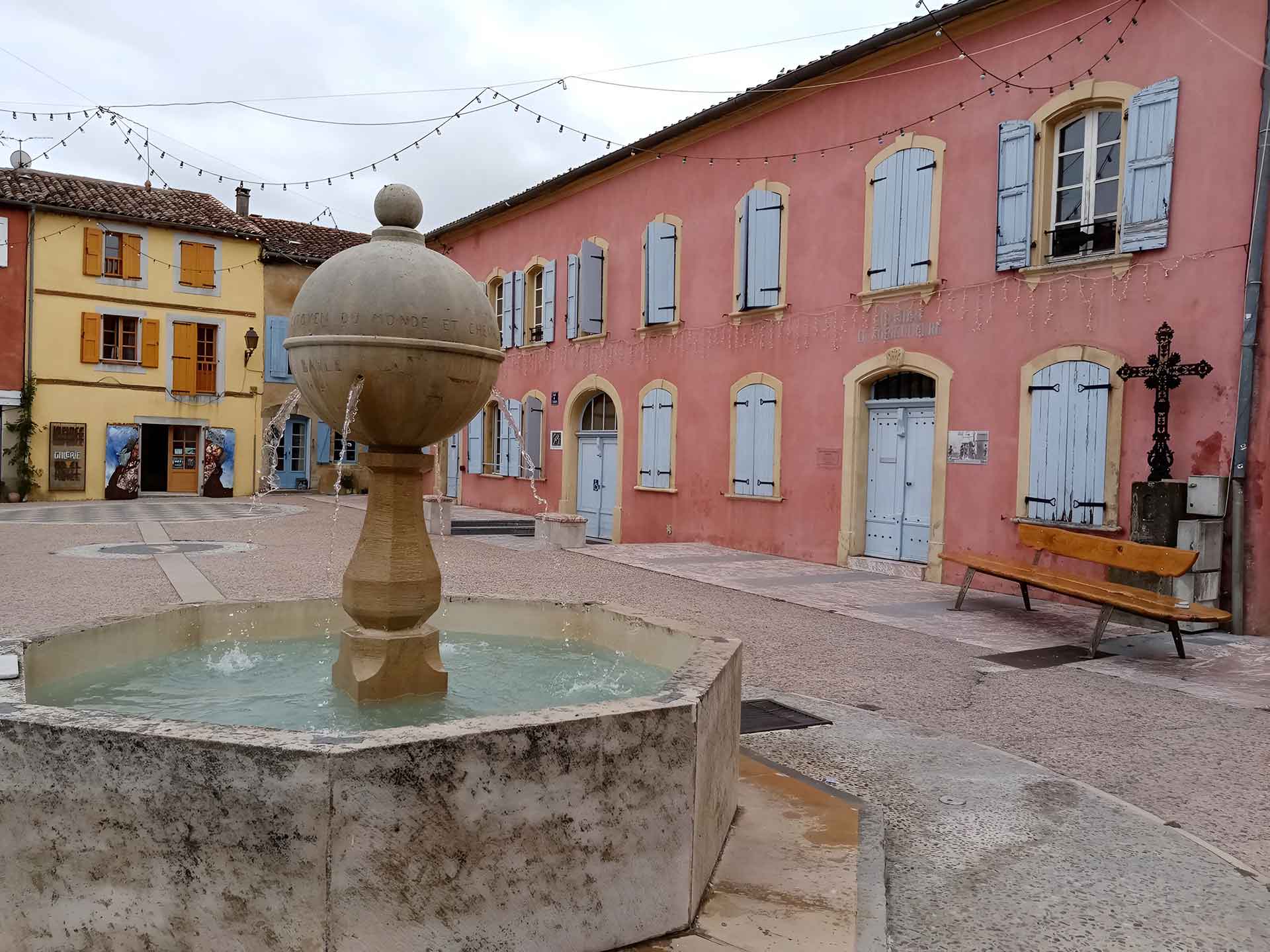
Carla-Bayle, a small, picturesque village surrounded by ramparts, perched on its rocky outcrop at an altitude of 400 meters, is considered by everyone to be THE art village of Ariège. The village is home to numerous art galleries, some of which can be visited all year round… and especially during the famous “Rue des Arts” visual arts festival in July and August.
You have to take the time to stroll through the streets to appreciate the beauty of the village: cobbled streets, half-timbered houses, sculptures by Volti, ramparts.
To discover
– The church: Built in the 12th century, the church truly embodies the spirit of Carla-Bayle. Inside, a large fresco painted by Tristan Rà stretches out just above the nave.
– The Pierre Bayle‘s house : the philosopher’s birthplace, in which his biographical and intellectual journey is traced!
– The galleries and events at the City of Arts.
– The Auberge Pierre Bayle, one of the best restaurants in Ariège, offers authentic, refined cuisine and a beautiful view of the Pyrenees mountain range!
– The “Carla Thursdays“, an unmissable event every Thursday evening in July and August, a time for warm encounters and a unique atmosphere!
The Medieval Bastide
of Mazeres
At the heart of Cathar history, the bastide of Mazères became the residence of the Counts of Foix, and Gaston Fébus (14th century) built his castle there.
In the 15th and 16th centuries, its economy was stimulated by the rise of woad cultivation.
In the 16th century, Mazères became the most important Protestant stronghold in the County, and during the Wars of Religion, many religious and military buildings were burned and demolished.
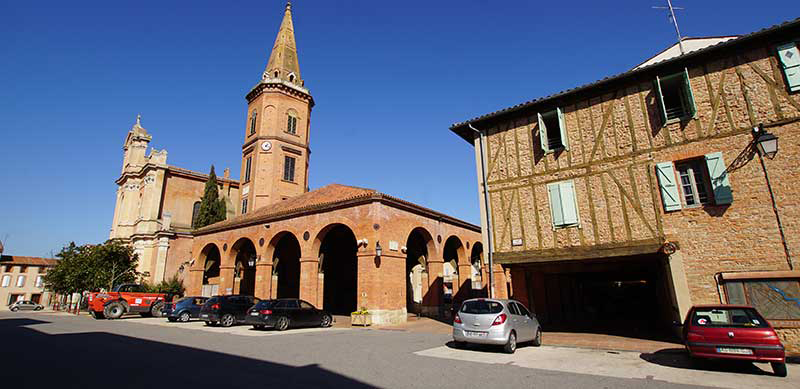
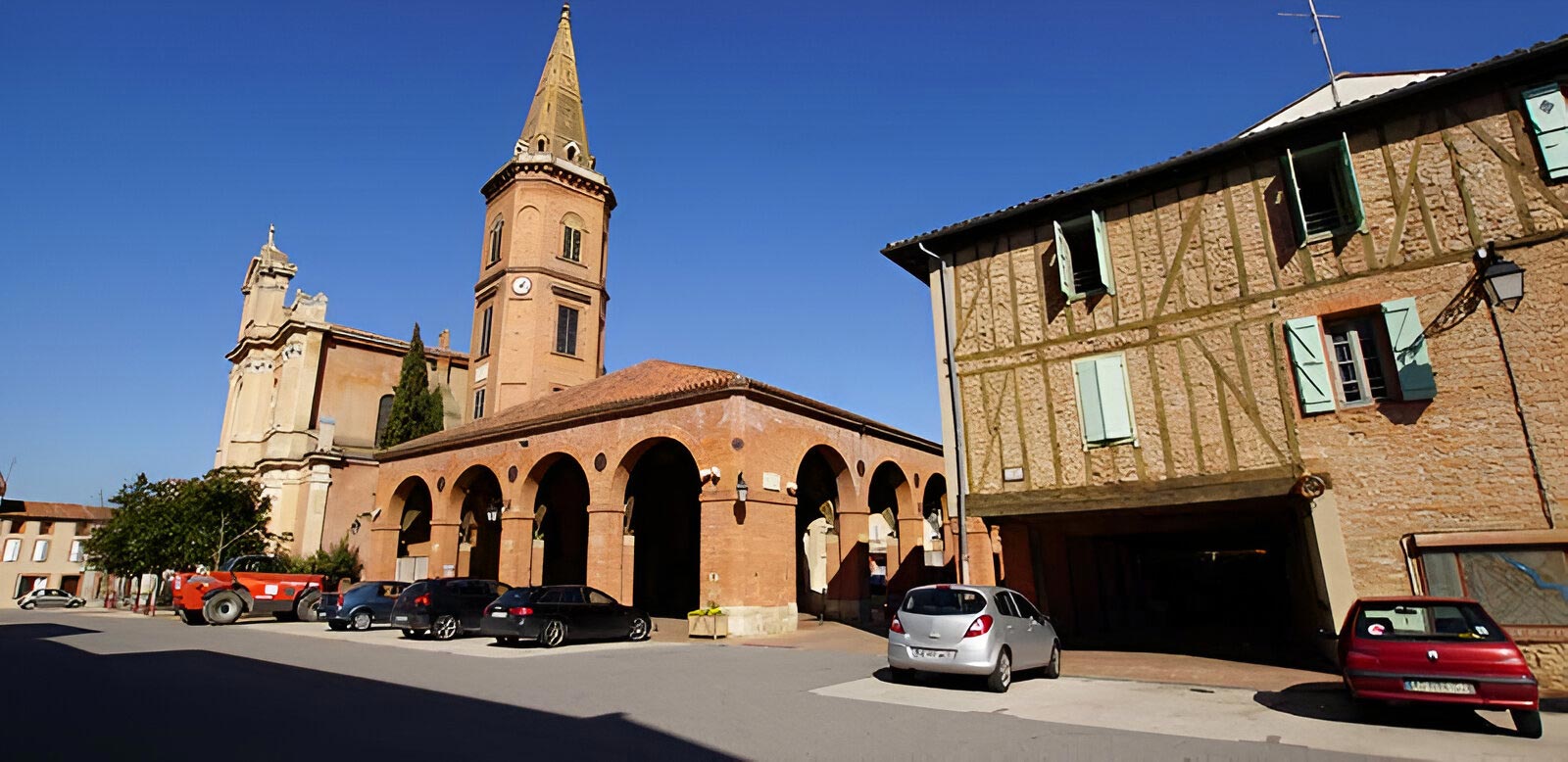
Mazères is surprising due to the richness of its monuments, built mainly from the 18th century onwards:
The parish church, begun in 1867, was completed in 1885 with the installation of the bell tower spire.
-The market hall adjacent to the church, which is a listed historical monument.
– The covered areas with half-timbered houses
– The beautiful buildings on Gaston de Foix and Martimor streets
-The former residence of the Abbots of Boulbonne, La Castellane, currently houses the town hall
– The former Dominican convent built in 1878
– The temple
It is also worth noting on the banks of the Hers, the remains of the medieval bridge destroyed by a flood of the river in 1875.
COORDONNÉES :
8 Rue Gaston de Foix – 09270 Mazères
Tél. 05 61 69 31 02

Découvrez également
nos autres activités

 Réserver